Category: Design Blogs

Visual Merchandising – Overview Of The Art of Product Display

Fashion Courses Interior Design Courses Jewellery Design Courses UI/UI Courses Visual Arts Courses Other Courses OTHER COURSES Do you have more questions? Read our FAQ Contact us Bengaluru Campus 1 : JD School of Design, No. 18-1, Brigade Road, Bengaluru,Karnataka – 560 001. Campus 2 : No. 40, Swan House, 4th Cross, Residency Road, Bengaluru, Karnataka – 560001. +91 9901 999 903 +91 9901 999 904 +91 9480 323 232 jdfashion@jdindia.com Goa Musthtifund Saunstha , Near Mahalaxmi Temple,Dada Vaidya Road, Goa-403001 +91 9606 096 060 +91 9606 048 888 jdfashion@jdindia.com Visual Merchandising – An Art That Involves Strategy Visual merchandising is an art form that involves the strategic arrangement and presentation of products in a way that is visually appealing to customers. It is a vital aspect of retail marketing that aims to enhance the overall shopping experience, attract customers, and ultimately drive sales. In this article, we will delve into the world of visual merchandising, exploring its key principles, techniques, and benefits. Visual Merchandising: Goals and Significance At its core, visual merchandising is about creating an immersive and enticing environment that captivates customers and encourages them to explore the store. It involves the use of various design elements such as color, lighting, signage, and layout to create visually stunning displays that effectively communicate the brand’s message and highlight the unique features of the products. One of the primary goals of visual merchandising is to create a strong visual impact through window displays. The window display serves as a storefront advertisement, giving potential customers a glimpse into what the store has to offer.A well-designed window display can capture attention, spark curiosity, and entice passersby to step inside the store. It should effectively convey the brand’s identity, showcase the latest products or promotions, and create a sense of excitement and anticipation. Inside the store, visual merchandising continues to play a crucial role in guiding customers through the space and influencing their purchasing decisions. Strategic placement of displays, signage, and product arrangements helps create a seamless and engaging shopping journey. By carefully curating the visual elements, retailers can create a narrative or story that connects with customers on an emotional level, evoking desire and creating a memorable experience.   Visual Merchandising Tools: 1. Color is a powerful tool in visual merchandising as it can evoke specific emotions and influence customer perceptions. Each color has its psychological impact, and retailers can strategically use color schemes that align with their brand image and product offerings. For example: Warm colors like red and orange can create a sense of excitement and urgency, while cool colors like blue and green can evoke a feeling of calmness and serenity. 2. Lighting is another essential aspect of visual merchandising that significantly impacts the overall ambiance of the store. Proper lighting can highlight specific products, create focal points, and set the mood. Natural light, spotlights, and accent lighting can be used to draw attention to key areas or create a dramatic effect. Lighting can also be adjusted to create different atmospheres for different sections of the store, catering to the specific needs and preferences of the target audience. 3.Props usage gives textures, and materials also play a significant role in visual merchandising. Props can add depth and context to displays, creating a sense of realism and enabling customers to envision themselves using the products. The choice of textures and materials can enhance the visual appeal and tactile experience, reinforcing the brand’s image and product qualities. Additionally, visual merchandising extends beyond just the physical aspects of the store. Digital Visual merchandising: In the digital age, online visual merchandising has become increasingly important. Retailers must ensure that their online platforms, such as websites and social media, reflect the same level of thoughtfulness and attention to detail as their physical stores. Consistency in branding, imagery, and product presentation across all channels is key to creating a cohesive and immersive brand experience. The benefits of effective visual merchandising are numerous. Well-executed displays can attract attention, generate foot traffic, and create a positive first impression of the brand. Engaging and memorable visual merchandising can also foster brand loyalty, as customers are more likely to remember and return to stores with visually appealing and enjoyable shopping experiences. Furthermore, by effectively showcasing products and promotions, visual merchandising can significantly impact sales and drive revenue growth. increase sales. Effective visual merchandising requires a deep understanding of the target audience, brand image, and market trends. By investing in visual merchandising, retailers can differentiate themselves from competitors, build customer loyalty, and ultimately achieve business success. Consider your role as a visual merchandiser just like an enchantress of marketing strategy, where you leverage your refined and specialized design abilities to bolster the reputation, offerings, and endeavors of retail enterprises and other entities. Devote your attention to crucial components encompassing the storefront and interior, store arrangement, interior embellishments, and exhibits to curate visually captivating product showcases and store layouts that captivate customers and prompt purchases. This skill is carefully taught at the JD Institute of Design under the expert guidance of brilliant staff, so wait no more and contact us by clicking on the link www.jdinstitute.edu.in

The Mysuru Art Of Sculpting- Mapping Indian Architecture for Generations

Fashion Courses Interior Design Courses Jewellery Design Courses UI/UI Courses Visual Arts Courses Other Courses OTHER COURSES Do you have more questions? Read our FAQ Contact us Bengaluru Campus 1 : JD School of Design, No. 18-1, Brigade Road, Bengaluru,Karnataka – 560 001. Campus 2 : No. 40, Swan House, 4th Cross, Residency Road, Bengaluru, Karnataka – 560001. +91 9901 999 903 +91 9901 999 904 +91 9480 323 232 jdfashion@jdindia.com Goa Musthtifund Saunstha , Near Mahalaxmi Temple,Dada Vaidya Road, Goa-403001 +91 9606 096 060 +91 9606 048 888 jdfashion@jdindia.com Mysuru Art of Sculpting is the most well-renowned way of stone carving which has been done in the Indian Subcontinent for thousands of years. Mysuru Art of Sculpting has been depicted as the most elaborate and attractive way of stone carving in the history of Indian Architecture. Stone, wood, and even sand are being sculpted at Mysuru, leaving no leaf unturned for the art form to flourish and get recognized by people worldwide. Mysuru Stone Carving art: Mysuru, with its rich cultural heritage, is renowned for its exquisite stone carving art. The intricate craftsmanship reflects the city’s historical significance and artistic prowess. Artisans in Mysuru have perfected the skill of transforming plain stones into mesmerizing sculptures. One notable example is the Chennakesava Temple in Somanathapura, showcasing remarkable stone carvings dating back to the Hoysala period. The intricate detailing on the pillars and walls is awe-inspiring, depicting mythological stories, deities, and flora. Another gem is the Mysuru Palace, where the stone carvings narrate tales of royalty and cultural amalgamation. The delicate wall patterns add a regal touch to this architectural marvel. Now, let’s talk about how this art form could tie into your interests. Imagine incorporating elements of Mysuru stone carving patterns into fashion or art. You could create unique, budget-friendly home decor items inspired by these designs. Even in social media marketing, sharing the history and beauty of Mysuru stone carving could engage your audience and bring attention to this magnificent art form. Sand Sculpting: Artists transform the grains of Mysuru’s fine sand into breathtaking sculptures, showcasing the city’s cultural heritage. The annual Mysuru Sand Sculpture Exhibition is a testament to this unique art form, where the majestic Mysuru Palace, intricate patterns, and mythological figures come to life on the sandy canvas. One notable example is the depiction of Dasara festivities, capturing the essence of the city’s grand celebration. Considering your interest in art and styling on a budget, imagine incorporating sand sculpture motifs into your content. It could inspire DIY projects or budget-friendly decor ideas, adding a touch of Mysuru’s artistic flair to your creative pursuits. Sand Sculpture Museum in Mysuru showcases about 150 different sculptures made out of 100+ truckloads of sand. Exhibits are categorized under 16 different themes such as heritage, culture, wildlife, mythology, wildlife, fairy tales etc. Spread over 13000 sq ft, Sand Sculptures are designed to last years and are protected from rain with temporary roofs. Major attractions include the laughing Buddha, Chamundeshwari goddess, Ganesha, and many more. Mysuru Wood Carving/Sculpting: Artisans skillfully carve intricate designs into wood, creating pieces that blend tradition with contemporary aesthetics. The intricacy of the carvings is exemplified in the ornate doors of the Ambavilas Palace, showcasing mythological tales and floral motifs. The Saint Philomena’s Church, adorned with finely carved wooden altars, is another masterpiece highlighting Mysuru’s wood carving prowess. Considering your love for art and styling on a budget, incorporating elements of Mysuru wood carving into your home decor or fashion content could be a unique and culturally rich direction. Various carvings on Rosewood are also done with quite finesse and beauty that attracts customers from all over the world. People come over to Mysuru to buy those carved wooden frameworks just for the love of skillful carving Mysuru Sculpting lineage: Mysuru’s art of sculpting is now residing in the holy city of Ayodhya. The ram idol standing in the center sanctum of the temple is carved by the Arun Yogiraj. He took an exile of 6 months to complete the idol of a 5-year-old Ram. The sculpted Ram idol is considered the biggest spectacle which will be standing in the heart of Ayodhya for at least 1,000 years. Arun Yogiraj is the 5th generation generation sculptor who has always received appreciation for his work and skills. After his work was portrayed a the idol os Shankaracharya, Subhash Chandrabose, and many more, Ram Mandir Trust panned their eyes towards Arun Yogiraj and gave him the responsibility of carving the Ram Lalla idol. And the responsibility was fulfilled with pride and joy. This is the story of Arun Yogiraj, but a story similar to this can be of yours too! All you need to do is log on to https://www.jdinstitute.edu.in/ and make your pathway to learning and recognition! Apply NOW!

Nagara Style of Temple Carving

Nagara Style of Temple Carving- A Northern Architectural Remembrance

Fashion Courses Interior Design Courses Jewellery Design Courses UI/UI Courses Visual Arts Courses Other Courses OTHER COURSES Do you have more questions? Read our FAQ Contact us Bengaluru Campus 1 : JD School of Design, No. 18-1, Brigade Road, Bengaluru,Karnataka – 560 001. Campus 2 : No. 40, Swan House, 4th Cross, Residency Road, Bengaluru, Karnataka – 560001. +91 9901 999 903 +91 9901 999 904 +91 9480 323 232 jdfashion@jdindia.com Goa Musthtifund Saunstha , Near Mahalaxmi Temple,Dada Vaidya Road, Goa-403001 +91 9606 096 060 +91 9606 048 888 jdfashion@jdindia.com The Nagara style of temple architecture, a significant facet of Indian cultural heritage, showcases a rich blend of spirituality and artistic brilliance. In this exploration, we’ll unravel the intricacies of Nagara architecture, understanding its key features and the profound symbolism behind each element. 1. Origins and Evolution 1.1 Historical Roots Tracing back to the 5th century, the Nagara style of temples originated in the northern regions of India and was first documented by the Gupta dynasty in the 5th century CE. Its evolution can be observed through various periods, each contributing unique elements to the overall aesthetic. 1.2 Influence of Vastu Shastra At its core, the Nagara style of temple architecture is deeply rooted in Vastu Shastra, an ancient Indian architectural science. This influence is evident in the meticulous planning and alignment of the temples. Nagara temples are built on a raised plinth, with the garbha griha (sanctum sanctorum) — where the idol of the deity rests — the most sacred part of the temple. Towering over the garbha griha is the shikhara (literally ‘mountain peak’), the most distinguishable aspect of Nagara-style temples. Major Features of Nagara Style of Architecture or North India Temple Style Some of the major features of North Indian temple architecture include the following: Shikhara: The shikhara is the tallest tower of the temple. It is typically pyramidal and tapers towards the top. It is topped by a bulbous finial called a kalasha. Plan: Nagara temples are typically built on a square or rectangular plan. The shikhara is located in the center. The temple may also have many smaller towers, called mukhamandapas, located around the shikhara. Walls: The walls of Nagara temples are typically made of stone or brick. They are decorated with sculptures and reliefs. The walls may also have a series of windows, which allow light to enter the temple. Pillars: The pillars of Nagara temples are typically carved with intricate designs. They are topped by capitals that support the roof. Toranas:The toranas are the gateways to the temple. They are typically made of stone or wood and are decorated with sculptures and reliefs. Mandapa:The mandapa is the main hall of the temple. It is where the devotees gather to worship the deity. Pillars typically support the mandapa and have a high ceiling. Garbhagriha: The garbhagriha is the innermost sanctum of the temple, where the deity is enshrined. It is a small, dark room that is only accessible to the priests. The Nagara style of temple architecture stands as a testament to India’s rich cultural and spiritual legacy. Its intricate design, symbolic elements, and regional variations contribute to a vibrant architectural heritage that continues to captivate and inspire. As we explore these temples, we not only witness architectural marvels but also delve into the profound spiritual journey embedded in every stone and sculpture. There are a few examples as well: 1. Kandariya Mahadeva Temple, KhajurahoLocation: Khajuraho, Madhya Pradesh The Kandariya Mahadeva Temple is a masterpiece of Nagara architecture dating back to the 11th century. Its towering Shikhara, adorned with intricately carved sculptures, is a visual symphony. The temple’s exterior features Devakoshtas showcasing various deities, while the interior boasts a Garbhagriha dedicated to Lord Shiva. The erotic sculptures, controversial yet artistically profound, add a unique dimension to this UNESCO World Heritage Site. 2. Jagdish Temple, UdaipurLocation: Udaipur, Rajasthan The Jagdish Temple, built in the mid-17th century, exemplifies the Nagara architecture style in the royal city of Udaipur. Its three-tiered Shikhara, rising gracefully above the cityscape, captures the essence of Rajput architecture. The Mandapa, with its ornate pillars and carved ceiling, serves as a picturesque setting for religious ceremonies. Devotees flock to the Garbhagriha, dedicated to Lord Vishnu, where the deity resides in divine splendor. 3. Laxminarayan Temple, BhopalLocation: Bhopal, Madhya Pradesh A relatively modern example, the Laxminarayan Temple in Bhopal showcases the adaptability of Nagara architecture. Built in the 20th century, it seamlessly blends traditional design elements with contemporary aesthetics. The temple’s Shikhara, though less towering, is adorned with intricate carvings, and the Mandapa provides a serene space for prayers and gatherings. This temple reflects the enduring appeal of Nagara style across different periods. 4. Baijnath Temple, Himachal PradeshLocation: Baijnath, Himachal Pradesh Nestled in the scenic landscapes of Himachal Pradesh, the Baijnath Temple is a significant Nagara-style shrine dedicated to Lord Shiva. The temple, believed to be over 800 years old, boasts a tall and slender Shikhara with intricate carvings. The simplicity of its design and the serene surroundings make it a spiritual retreat. Baijnath Temple exemplifies how Nagara architecture has found its place in diverse geographical and cultural settings. Indian Archeology is a glossary for every aspiring interior designer, and here at JD Institute of Designing, you have a platform to explore more to learn and gain more. Just click on our websiteIndian Archeology is a glossary for every aspiring interior designer, and here at JD Institute of Designing, you have a platform to explore more to learn and gain more. Just click on our website Indian Archeology is a glossary for every aspiring interior designer, and here at JD Institute of Designing, you have a platform to explore more to learn and gain more. Just click on our website https://www.jdinstitute.edu.in/ and apply for admission!

Fashion Designing Basic Subjects You Need To Know - thumbnail

Fashion Designing: Basic Subjects You Need To Know

Fashion Courses Interior Design Courses Jewellery Design Courses UI/UI Courses Visual Arts Courses Other Courses OTHER COURSES Do you have more questions? Read our FAQ Contact us Bengaluru Campus 1 : JD School of Design, No. 18-1, Brigade Road, Bengaluru,Karnataka – 560 001. Campus 2 : No. 40, Swan House, 4th Cross, Residency Road, Bengaluru, Karnataka – 560001. +91 9901 999 903 +91 9901 999 904 +91 9480 323 232 jdfashion@jdindia.com Goa Musthtifund Saunstha , Near Mahalaxmi Temple,Dada Vaidya Road, Goa-403001 +91 9606 096 060 +91 9606 048 888 jdfashion@jdindia.com 1.Fashion Illustration: Fashion Designing has a core subject called fashion illustration and it is the art of visually expressing clothing designs through sketches and drawings. It’s a creative process where designers use various techniques to convey their ideas, from pencil and ink to digital tools. The illustrations capture the essence of a garment, showcasing its style, fabric flow, and overall aesthetic. Precision in portraying details like drapery and embellishments is crucial. Fashion Illustration serves as a communication tool between designers, helping them convey their concepts to clients, manufacturers, and the broader fashion community. It’s a vibrant blend of artistry and practicality in bringing fashion ideas to vivid life! 2.Textile Science: Textile Science involves the study of fabrics and materials used in fashion and fashion designing. It encompasses understanding the composition, properties, and manufacturing processes of textiles. This subject delves into the intricacies of fibers, yarns, and fabric structures, considering aspects like durability, texture, and color retention. Knowledge of textile science is vital for designers, enabling them to make informed decisions about material selection, and ensuring the functionality and aesthetic appeal of their creations. It’s the science behind the feel and look of the garments, playing a key role in crafting fashion that not only looks good but also meets practical and comfort requirements. 3.Pattern Making In Fashion Designing, pattern-making is the art of creating templates that serve as guides for cutting and assembling fabric pieces to construct garments. It involves translating a designer’s vision into tangible shapes and dimensions, considering factors like fit and style. Pattern makers, meticulously draft templates for each component of a garment, ensuring precision and cohesion during the construction process. It’s a crucial skill in fashion design, bridging the gap between conceptualization and realization, ensuring that the final garment aligns with the intended design. This precision in pattern-making is fundamental for achieving well-fitted, aesthetically pleasing clothing. 4.Garment Construction Garment Construction in Fashion designing is the hands-on process of turning fabric and patterns into finished clothing. It involves stitching, seaming, and assembling pieces to create a wearable garment. Skilled artisans and tailors bring designs to life, meticulously following patterns, and employing various techniques like draping and pleating. Attention to detail is paramount to ensure proper fit, symmetry, and durability. Garment construction blends artistry with precision, transforming flat patterns into three-dimensional fashion pieces. It’s the tangible realization of a designer’s vision, where craftsmanship and technical expertise converge to produce stylish and functional apparel. 5.Fashion History: Fashion designing includes another key subject called UIfahion History that holds everything together that unfolds the evolution of styles and clothing trends over time. It explores how societal, cultural, and economic factors influence fashion. From ancient attire to modern couture, it traces the shifts in silhouettes, fabrics, and aesthetics. Studying fashion history provides designers with context, inspiring innovation and reinvention. It’s a journey through time, unraveling the significance of attire in different eras, reflecting societal values and individual expression. Understanding this historical tapestry empowers designers to draw from the past while creating contemporary fashion narratives. It’s a fascinating exploration connecting the dots between culture, identity, and style. 6.Color Theory: Color Theory is the science and art of using color to create visual harmony and impact. It explores the relationships between colors, their combinations, and the emotions they evoke which is very predominant in Fashion Designing. Primary, secondary, and tertiary colors, along with concepts like hue, saturation, and brightness, are integral. Designers leverage color theory to convey mood, evoke emotions, and establish a cohesive visual identity. Understanding contrasts, and analogous and complementary schemes enables effective color choices in fashion. It’s a palette of knowledge empowering designers to communicate through hues, adding depth and significance to their creations. 7.Fashion Marketing and Merchandising: Fashion Marketing and Merchandising is an integral component of the fashion business and courses in fashion Designing. Marketing involves promoting and positioning fashion products through advertising, branding, and digital strategies. Merchandising focuses on product selection, pricing, and inventory management to optimize sales. Together, they create a symbiotic relationship, where effective marketing enhances brand visibility, driving merchandising success. Understanding consumer behavior, market trends, and strategic promotion is key. Fashion marketing and merchandising professionals collaborate to ensure that not only are products stylish and desirable but they also reach the right audience at the right time. It’s the business side of fashion that makes trends accessible and profitable. 8.Computer-Aided Design (CAD) CAD or computer-aided design revolutionizes the fashion design process by employing digital tools for creating, modifying, and visualizing designs. It replaces traditional manual methods, allowing designers to sketch, draft patterns, and simulate garments on a computer. CAD is the most amazing inclusion in Fashion Designing courses as it facilitates precision, speed, and flexibility, streamlining the design journey. Designers use specialized software to manipulate shapes, colors, and textures, enabling rapid prototyping and iteration. It enhances collaboration and communication within the fashion industry, from concept to production. CAD is a technological cornerstone, bridging creativity with efficiency, and is integral for modern designers navigating the intersection of fashion and technology. All the above are the key subjects that one needs to learn to explore and kickstart a career in the fashion Industry. There is so much more to the field of fashion designing and the fashion industry that these few words will never accomplish the justification of its vastness. To know more about this career and its future all you need is to look up for JD School of Designing. To apply for the courses click on the link www.jdinstitute.edu.in and get started with a wonderful start to an amazing career.  

UIUX First Semester Display From Concept to Applause at Jury - Thumbnail

UI/UX First Semester Display: From Concept to Applause at Jury

Fashion Courses Interior Design Courses Jewellery Design Courses UI/UI Courses Visual Arts Courses Other Courses OTHER COURSES Do you have more questions? Read our FAQ Contact us Bengaluru Campus 1 : JD School of Design, No. 18-1, Brigade Road, Bengaluru,Karnataka – 560 001. Campus 2 : No. 40, Swan House, 4th Cross, Residency Road, Bengaluru, Karnataka – 560001. +91 9901 999 903 +91 9901 999 904 +91 9480 323 232 jdfashion@jdindia.com Goa Musthtifund Saunstha , Near Mahalaxmi Temple,Dada Vaidya Road, Goa-403001 +91 9606 096 060 +91 9606 048 888 jdfashion@jdindia.com Imagine a world where booking your office seat is painless, finding the perfect recipe with instant ingredient delivery is a snap, and connecting with your ideal internship is just a click away. These are not futuristic fantasies, they are the innovations of talented first-semester MA in UI/UX students at JD School of Design powered by JD Institute of Fashion Technology, which were unveiled Jury. Industry veteran Mr. Krishna Kumar, a Senior Art Director with 25 years of experience was the Jury for the day along with the faculty members. The young designers did not just showcase exceptional interfaces, they tackled real-world needs with user-centric solutions that impressed the Jury and offered practical answers to everyday challenges. Here is a glimpse into the innovative apps: Neko: Say goodbye to office seat booking chaos! Neko streamlines the process for IT firms, ensuring a seamless and stress-free experience for employees. Instacook: Craving a delicious dish but dreading the grocery run? Instacook takes the cooking hassle out of the equation by connecting you with recipes and instant Zepto delivery of all the ingredients you need. Founders Fusion: Aspiring entrepreneurs, unite! This platform fosters collaboration and knowledge sharing, creating a vibrant hub for budding business minds. Hiresphere: Say hello to smarter recruitment! Hiresphere utilizes automation to screen resumes and identify the perfect candidates, saving employers valuable time and resources. Onfashion: Fashionistas rejoice! This all-in-one platform showcases the work of talented designers, offering a one-stop shop for trendy apparel and accessories. Apoorvakala: Bridging the gap between traditional artisans and modern students, Apoorvakala allows aspiring artists to learn and master the art of handicrafts. Easy HR: Finding the perfect internship just got easier. Easy HR visually matches students with suitable companies or studios based on their skills and portfolios, making placement a breeze.

Imagination Journey 2023 JD’s International Study Tour OctoberNovember 2023

Imagination Journey 2023: JD’s International Study Tour October/November 2023

Fashion Courses Interior Design Courses Jewellery Design Courses UI/UI Courses Visual Arts Courses Other Courses OTHER COURSES Do you have more questions? Read our FAQ Contact us Bengaluru Campus 1 : JD School of Design, No. 18-1, Brigade Road, Bengaluru,Karnataka – 560 001. Campus 2 : No. 40, Swan House, 4th Cross, Residency Road, Bengaluru, Karnataka – 560001. +91 9901 999 903 +91 9901 999 904 +91 9480 323 232 jdfashion@jdindia.com Goa Musthtifund Saunstha , Near Mahalaxmi Temple,Dada Vaidya Road, Goa-403001 +91 9606 096 060 +91 9606 048 888 jdfashion@jdindia.com Imagination Journey is an international study tour conducted by JD. They take students on an enriching educational journey opening doors to diverse cultures and expanding horizons. This year’s journey was particularly special as it included an additional destination – the vibrant city of Amsterdam. Amsterdam Imagination Journey is an international study tour conducted by JD. They take students on an enriching educational journey opening doors to diverse cultures and expanding horizons. This year’s journey was particularly special as it included an additional destination – the vibrant city of Amsterdam. Paris Paris, the epitome of fashion, provided design students with an unparalleled opportunity to witness the intersection of history and haute couture, fostering creativity and inspiration. In Paris, they enjoyed the iconic Eiffel Tower at night and visited Sacré-Cœur for a breathtaking city view. Disneyland’s Halloween parade and fireworks stole our hearts, and exploring galleries like Lafayette and La Vallée Village provided insights into fashion trends and luxury brands. The experience was enhanced by the Halloween theme and heavy discounts on renowned brands. The exposure to Amsterdam and Paris proved instrumental for design students, offering a first-hand look at diverse design styles and techniques. This global perspective enriched their understanding and fuelled creativity, providing a unique lens through which to approach their projects. Immersive AI Experiences and Tour of London London offered immersive AI experiences, including a visit to Bicester Village for unique collections and heavy discounts. The tour also included iconic landmarks like the London Eye, Tower of London, and Borough Market, providing a rich cultural and gastronomic experience. Diwali celebrations at Trafalgar Square added a vibrant touch to our London experience. Fashion Styling Course in London London became the stage for an intensive fashion styling course, led by Ms. Alice Wilby, International Professor – Sustainable Fashion and Conceptual Fashion Styling at Central St. Martins, London. The styling course focused on “The Modern Vintage,” applying learnings from different cities. Topics ranged from trend analysis to styling for different demographics. This immersive experience broadened students’ expertise and introduced them to cutting-edge trends in the global fashion industry. Fashion Shoot The journey reached its pinnacle with a captivating fashion shoot at the end of the course. Students applied the skills acquired during the London sessions, creating stunning portfolios under the guidance of industry professionals. Institutional VisionAt JD, offering such courses aligns with our commitment to providing holistic education. We aim to nurture not only academic excellence but also a global perspective. The international exposure prepares students to thrive in an interconnected world, where collaboration and cross-cultural understanding are paramount. Providing World PerspectiveBy exposing students to different cultures and educational methodologies, international study tours lay the foundation for a global mindset. It instills values of open-mindedness and tolerance, essential for success in an increasingly interconnected world. JD’s international study tour goes beyond geographical boundaries. It is a transformative journey that shapes the future leaders of design and fashion, instilling in them a deep appreciation for diversity and a passion for innovation. As we look forward to future endeavours, we remain committed to providing opportunities that empower our students to become global citizens and leaders in their respective fields. Imagination Journey 2023 Imagination Journey 2023 Imagination Journey 2023 Imagination Journey 2023 Imagination Journey 2023 Imagination Journey 2023 Imagination Journey 2023 Imagination Journey 2023

SALONI-JAIN_BSC-IDD-2019_18TH-AUG-2022_THURSDAY_BEST-THESIS-OF-THE-YEAR

Outstanding Achievement of our Interior Design student Saloni Jain: Rank 8th in Bengaluru City University

Fashion Courses Interior Design Courses Jewellery Design Courses UI/UI Courses Visual Arts Courses Other Courses OTHER COURSES Contact us Bengaluru Campus 1 : JD School of Design, No. 18-1, Brigade Road, Bengaluru,Karnataka – 560 001. Campus 2 : No. 40, Swan House, 4th Cross, Residency Road, Bengaluru, Karnataka – 560001. +91 9901 999 903 +91 9901 999 904 +91 9480 323 232 jdfashion@jdindia.com Goa Musthtifund Saunstha , Near Mahalaxmi Temple,Dada Vaidya Road, Goa-403001 +91 9606 096 060 +91 9606 048 888 jdfashion@jdindia.com Saloni Jain, a student of JD School of Design powered by JD Institute of Fashion Technology ranked 8th for BSc. in Interior Design and Decoration course in Bengaluru City University. Throughout her academic journey, she has consistently demonstrated a remarkable level of talent and dedication. She has consistently delivered outstanding projects, showcasing a unique blend of creativity, technical proficiency, and attention to detail. She has been able to articulate and understand the nuances of interior design which had helped her get noticed and applauded by the faculty and other pupils of the institute. Engaging in scholarly endeavors has always been an important aspect of personal growth and development. The pursuit of knowledge and understanding expands our horizons and allows us to explore new perspectives and ideas. Whether it be through formal education or independent research, academic pursuits challenge us to think critically and creatively, and help us to become more well-rounded individuals. Through academic pursuits, we can gain a deeper understanding of the world around us and make valuable contributions to our fields of study. Embracing the academic journey opens up opportunities for personal and professional growth, and allows us to become active participants in the global community of learners. Saloni’s pursuit of Interior Design revealed her impressive dedication towards studying. Throughout her educational journey, she developed a profound understanding and admiration for the subject. She explored complex concepts, such as advanced design methodology, design software mastery, design thinking, space utilization, and lighting. With consistent enthusiasm, she consistently exhibited a remarkable comprehension of the material. Beyond the confines of traditional classrooms, there exists a realm of knowledge waiting to be explored. Education knows no boundaries and can occur in various settings, whether it be through experiences, interactions, or self-discovery. This dynamic approach to learning encourages individuals to think critically, problem-solve, and apply their knowledge to real-world situations. It recognizes that education is a lifelong process that extends far beyond the walls of a classroom. In this ever-evolving world, where information is readily accessible, learning becomes a personal journey that empowers individuals to discover their passions and cultivate their skills. Whether it be through travel, volunteering, or pursuing hobbies, opportunities for growth and enlightenment abound. By embracing a broader definition of education, individuals can tap into their curiosity, gain new perspectives, and become lifelong learners. Saloni’s enthusiasm for knowledge extended beyond the four walls of her classroom. She vigorously pursued chances to augment her comprehension by engaging in research endeavors, participating in conferences, and cooperating with peers and faculty. Through her dedicated involvement in these endeavours, she not only sharpened her scholastic understanding but also widened her outlook on the practical applications of interior design. She possesses an extraordinary work ethic and an impressive track record of achievements, which makes her future prospects in academia and similar fields boundless. Her insatiable hunger for knowledge, coupled with her unwavering passion for interior design, renders her an exceptionally strong candidate for grants, internships, and advanced research endeavors. Furthermore, her capacity for leadership and eagerness to cooperate are distinguishing qualities that exemplify her as an exemplary team member. We wish Saloni, hearty congratulations and hope you are able to see all your dreams through! Do not stop learning and upskilling, here on the journey is only forwards.

Ruder-D-Top-Ranked-Interior-Design-Student-in-Bengaluru-City

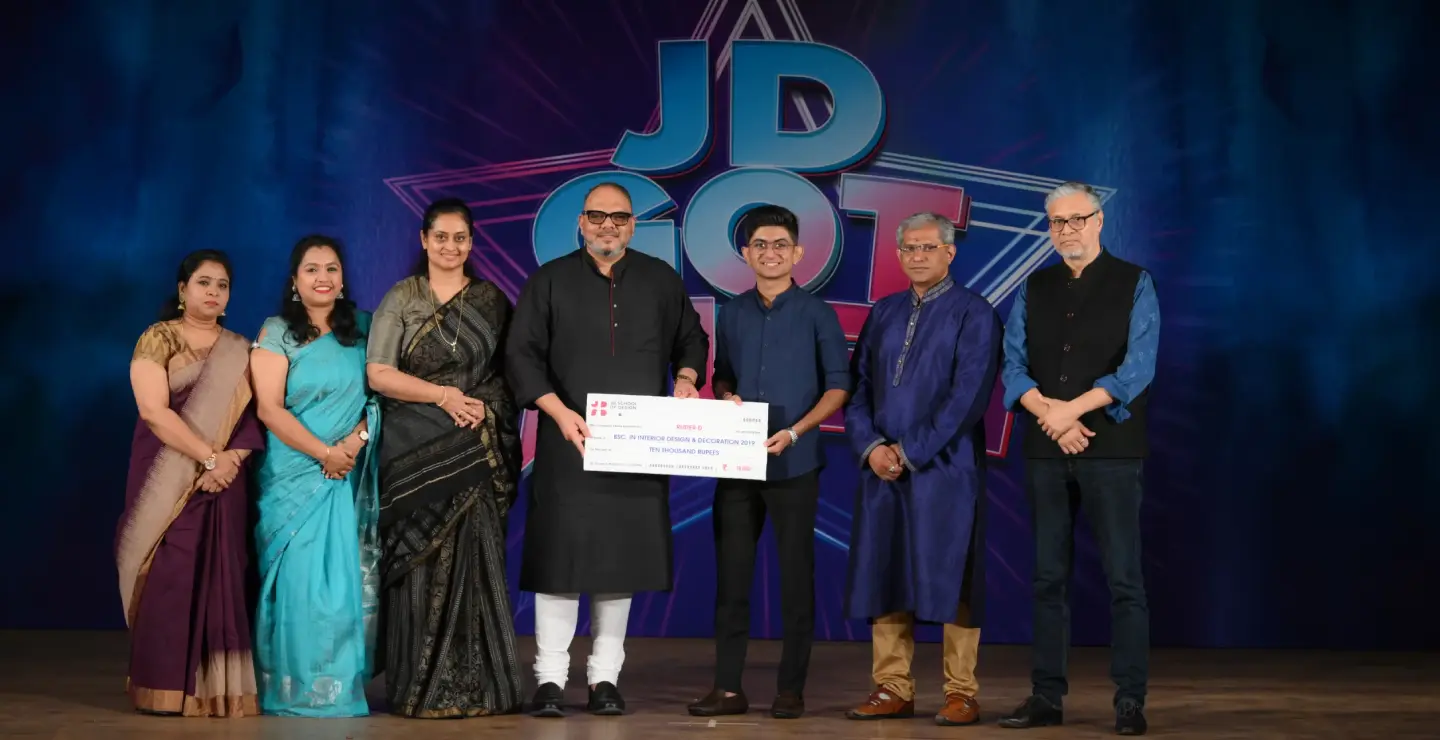
Ruder D, Top-Ranked Interior Design Student in Bengaluru City University: A Creative Visionary in the Making

Fashion Courses Interior Design Courses Jewellery Design Courses UI/UI Courses Visual Arts Courses Other Courses OTHER COURSES Contact us Bengaluru Campus 1 : JD School of Design, No. 18-1, Brigade Road, Bengaluru,Karnataka – 560 001. Campus 2 : No. 40, Swan House, 4th Cross, Residency Road, Bengaluru, Karnataka – 560001. +91 9901 999 903 +91 9901 999 904 +91 9480 323 232 jdfashion@jdindia.com Goa Musthtifund Saunstha , Near Mahalaxmi Temple,Dada Vaidya Road, Goa-403001 +91 9606 096 060 +91 9606 048 888 jdfashion@jdindia.com Ruder D, Top-Ranked Interior Design Student in Bengaluru City University: A Creative Visionary in the Making Ruder D, student of BSc. in Interior Design and Decoration at JD School of Design powered by JD Institute of Fashion Technology, Bengaluru achieved an impressive rank in Bengaluru City University. With a genuine passion for design and a relentless pursuit of excellence, he has distinguished himself as a rising star in the field of interior design. He possesses a strong passion for creating aesthetically pleasing and functional spaces. With a keen eye for detail and a creative mindset, Ruder has excelled in his academic pursuits and demonstrated exceptional skills in various areas of interior design.   As a smart student, Ruder consistently demonstrated a high level of academic excellence in his interior design studies. He grasped complex concepts quickly and applied them effectively in his projects, earning him top honours and recognition from his professors and peers. Despite his exceptional academic performance, Ruder also actively participated in extra-curricular activities, showcasing his ability to balance multiple responsibilities and interests. He has demonstrated his enthusiasm for his field of study but also enhanced his practical knowledge and network within the industry. One of Ruder’s standout qualities is his happy-go-lucky nature, which fosters a positive and collaborative environment for teamwork. He has effortlessly engaged with his peers, and other professionals, effectively communicating his ideas. Ruder’s people-centric approach enables him to create great designs that aligns with clients’ perspective. Through his academic journey, Ruder acquired a range of skills that are essential in the field of interior design. These skills include: Space Planning: Ruder has developed a profound understanding of spatial layout and functionality, leading to the optimization of space which creates harmonious environments that cater to specific needs and purposes. Colour Theory and Coordination: He has a deep knowledge of colour psychology, enabling him to select appropriate colour schemes that evoke desired emotions and enhances the overall atmosphere of a space. Material Selection: Ruder is well-versed in identifying and selecting suitable materials, finishes, and furnishings that align with a project’s aesthetic and functional requirements. CAD and Design Software Proficiency: He has a strong command of computer-aided design (CAD) software and other industry-standard design tools, allowing him to create detailed and accurate visual representations of design concepts. Project Management: Ruder possesses excellent organizational and time-management skills, which enable him to oversee and coordinate interior design projects effectively.  Ruder understands the importance of adhering to timelines and budgets while ensuring the successful completion of each project. We wish Ruder all the very best in his future endeavours with flying colours.